
THE HISTORY OF PALESTINE
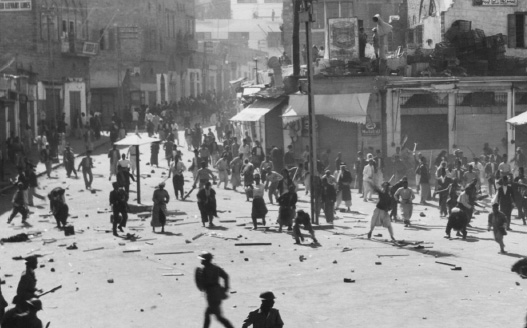
1917: Balfour Declaration
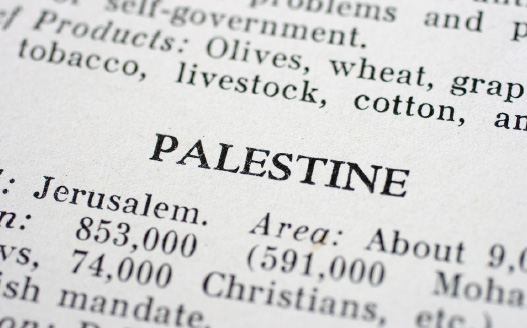
1947: UN Partition Plan
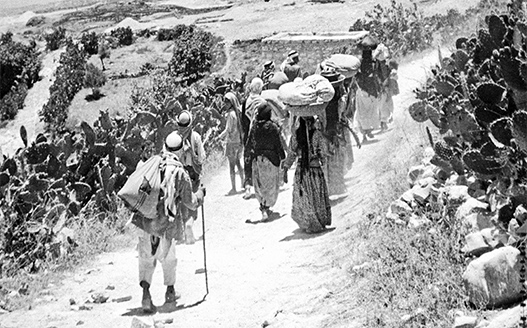
1948: Nakba (Catastrophe)
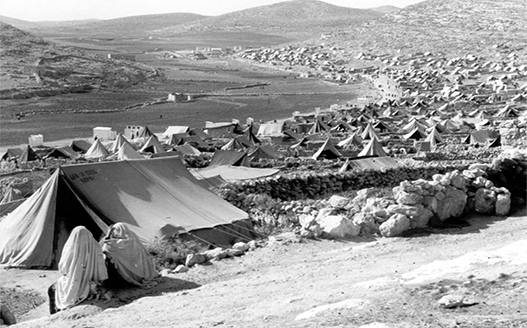
1949-1966: Refugee Crisis
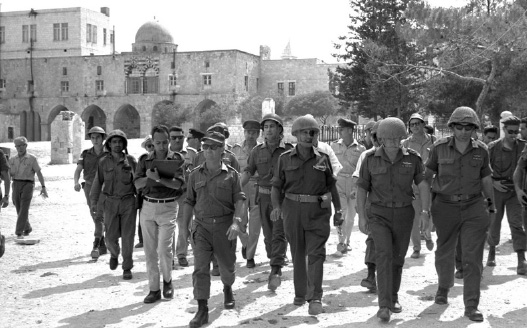
1967: Six-Day War
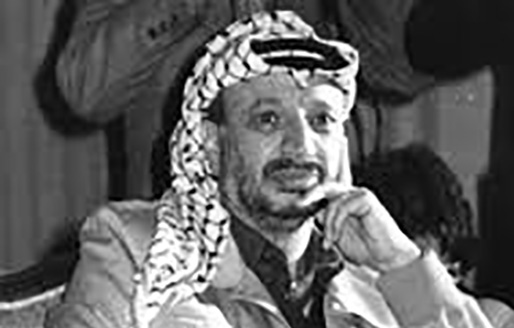
1968: Formation of the PLO
1987-1993: First Intifada
Intifada in Arabic means to ‘shake off’. At the time, illegal settlements in the occupied West Bank and Gaza Strip had been spreading, while Palestinians struggled economically which prompted a mass Palestinian uprising against Israeli occupation, following more than two decades of harsh occupation. The intifada involves widespread protests, civil disobedience, and clashes with Israeli forces.
On December 8, 1987, an Israeli vehicle crash in Gaza resulted in the deaths of four Palestinians. This incident sparked riots in Gaza’s Jabalia refugee camp, marking the beginning of the first Intifada. The uprising quickly spread to the occupied West Bank, met by an Israeli crackdown widely condemned internationally for its excessive violence. The UN Security Council condemned the Israeli government’s actions.
During the first Intifada, over 100 Israelis were killed by Palestinians, while Israeli forces killed at least 1,000 Palestinians. The years-long uprising eventually concluded with an agreement that some viewed as an outright surrender.
1993: Oslo Accords
Palestinian leader Yasser Arafat and Israeli Prime Minister Yitzhak Rabin signed the Oslo Accords, establishing a framework for peace and the creation of the Palestinian Authority (PA). The PA is given limited self-governance in parts of the West Bank and Gaza.
A second agreement in 1995 divided the occupied West Bank into three parts – Area A, B and C. The Palestinian Authority was offered only limited rule on 18 percent of the land as Israel effectively continued to control the West Bank.
2000-2005: Second Intifada
Frustration and anger had been steadily rising among Palestinians for years due to the successive Israeli governments’ refusal to honour the Oslo Accords and end the occupation. This simmering tension erupted into the Second Intifada, known by Palestinians as the al-Aqsa Intifada, after Ariel Sharon, then the Israeli opposition leader, visited the al-Aqsa Mosque compound in occupied East Jerusalem with over 1,000 heavily armed police and soldiers on September 28, 2000.
This provocative act ignited widespread outrage among Palestinians, who were also commemorating the anniversary of the 1982 Sabra and Shatila massacre, a tragedy for which Sharon had been held responsible for failing to prevent the bloodshed during Israel’s invasion of Lebanon.
2005: Gaza Disengagement
In what Israel called the “disengagement” from Gaza, some 8,000 Israelis living in illegal settlements in Gaza were pulled out of the Strip.
Israel claims that its occupation of Gaza ceased since it pulled its troops and settlers from the territory, but international law views Gaza as occupied territory since Israel has full control over Gaza’s borders, airspace, and maritime access.
2006: Hamas Election Victory
2007: Gaza Split
2008-2009: Gaza War
Israel launches a three-week major military assault in Gaza (Operation Cast Lead). More than 1,400 Palestinians were killed, including over 300 children as well as over 5,000 injuries. It was during this assault that evidence had shown Israel to be unlawfully using white phosphorus in urban populated areas. White phosphorus is a wax-like, toxic substance that burns at more than 800 degrees Celsius (nearly 1,500 degrees Fahrenheit) – high enough to melt metal.
2012: UN Status Upgrade
The UN General Assembly votes to upgrade Palestine’s status to a “non-member observer state.” This is seen as a symbolic victory for Palestinian statehood aspirations.
Operation ‘Pillar of Defense’: Israel launches another major military assault in Gaza. 150 Palestinians were killed, including 30 children. Despite lasting only one week, over 120 homes were destroyed and a further 2,050 damaged. Civilian infrastructure including places of worship, schools and health facilities were also destroyed.
2014: Operation ‘Protective Edge’
2017: US Recognition of Jerusalem, as Israel’s capital
2018: Great March of Return
2020: Normalisation Agreements
2021: Jerusalem Clashes and Gaza Conflict
2022-2024: Ongoing Struggle
On 7 October 2023, the Israeli military launched an all-out bombardment across Gaza, hitting homes, hospitals, clinics, schools and essential infrastructure. This has resulted in mass casualties and destruction of civilian infrastructure. The death continues to mount in the thousands as well as 2023 being designated as the ‘deadliest year’ for Palestinians in the West Bank. The health sector in Gaza has all but collapsed with a few facilities barely functioning, following the destruction of most hospitals in the strip. Famine has set into the north of Gaza, whereby malnutrition has become a threat.
A total siege remains in place with little aid entering the Gaza Strip as an unprecedented humanitarian crisis continues to spiral out of control. International condemnation and calls for an immediate ceasefire continue to fall on deaf ears, as Israel is called out for carrying out a genocide.